A mutual fund statement arrives by email. A fixed deposit sits in another bank. Your spouse uses a different broker, and a parent keeps investment paperwork in a folder. Each record may be perfectly valid, yet answering “What do we own?” can still take an afternoon.
Organising family investments starts with bringing the information into a consistent structure. You do not need to move your money or change providers to begin.
1. Decide whose investments you are recording
Write down the people whose records belong in your review, with their agreement. Keep individual and joint holdings clearly identified. If a record belongs to an entity, give that entity its own label rather than treating it as someone’s personal investment.
A family view is a way to understand information together. It does not change legal ownership, authorise transactions or give someone permission to use another person’s account.
2. Gather a dated set of source records
Collect the latest available statements or exports from the relevant institutions. Note both the statement date and when you reviewed it. A file downloaded today can still describe holdings from last month.
Keep the original records in a location you control. Your summary should point back to them so you can resolve a question without reconstructing the history.
3. Use the same fields for each holding
Start with owner, institution, investment name, account or folio reference, quantity where applicable, reported value and source date. Use masked references in a shared summary and keep the full originals separately.
If a statement does not show an amount, mark it as unknown. A blank is a task to resolve; replacing it with zero makes an incomplete picture look complete.
4. Check overlap before adding totals
Imagine one fund appears in a broker export and again in a consolidated statement. Those can be two views of the same holding. Adding both would inflate the family total.
Match records using the owner, account or folio, investment identifier where available and reporting date. Keep earlier statements as history, but decide which source represents a holding for the current review. If you cannot establish whether two entries overlap, leave the total provisional.
5. Give the records a repeatable review
Choose a cadence that fits your household. At each review, refresh stale sources, investigate missing accounts and record unresolved questions. The useful outcome is a picture you can explain, including what it leaves out.
SEBI’s investor guidance recommends retaining investment documents and reviewing your portfolio periodically. See SEBI’s securities-market do’s and don’ts.
6. How Punjii.com can help
Punjii is being built around this problem: your family’s investments, with a clearer structure for each owner and portfolio. Its private-beta work includes family and portfolio organisation and reviewed holdings-snapshot workflows. That approach can help turn scattered records into information you can review deliberately.
The public preview lets you explore the intended family overview and detailed investment layout before requesting access. Use it to see how the information could be organised, rather than as evidence that your own accounts are already connected.
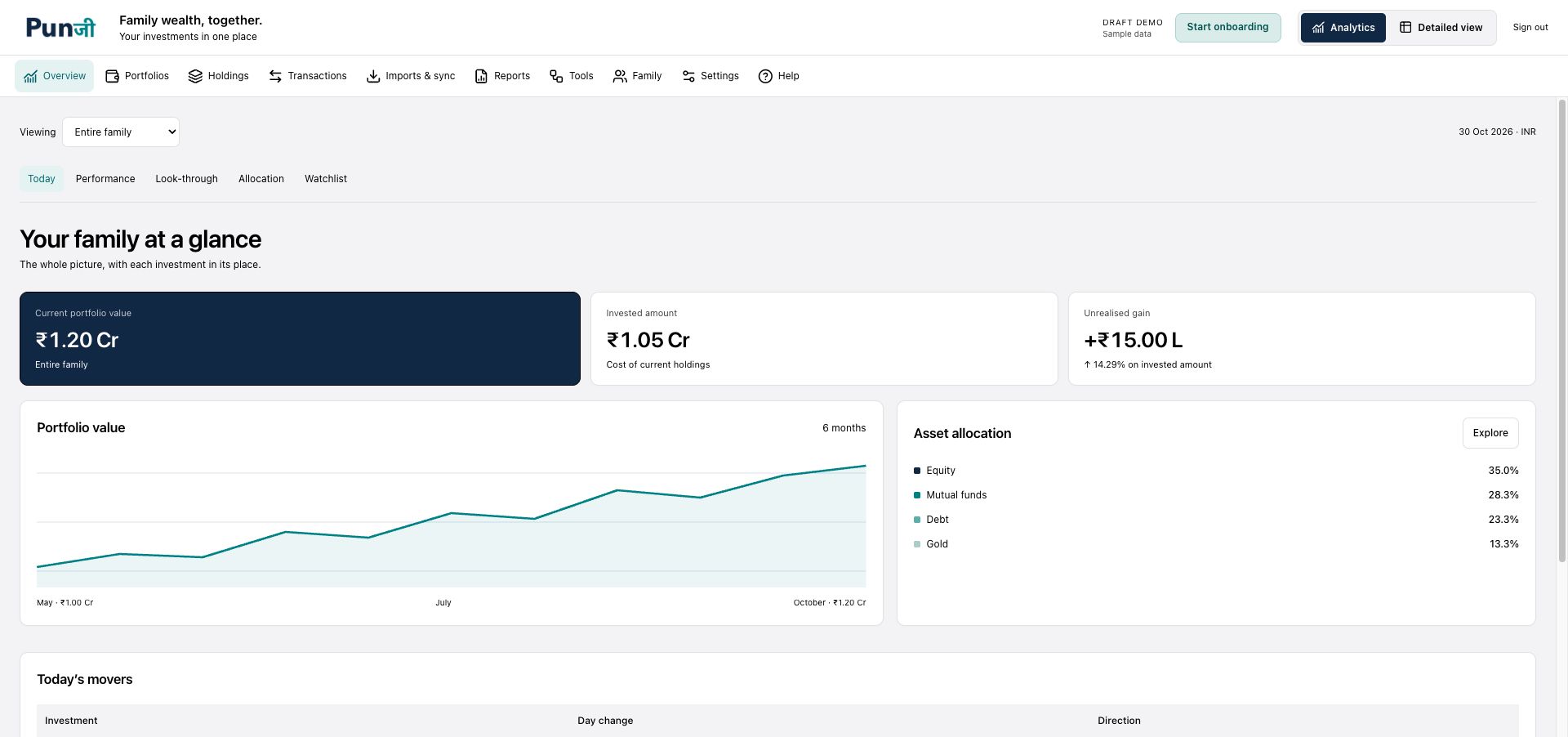
Automatic provider syncing and live consolidated valuation are not currently available. A reviewed snapshot is dated information, and adding a family-member record does not grant that person shared access.
Join the Punjii beta waitlist for availability and access updates. Private beta is opening in stages.
7. A useful first step today
Pick one owner and one institution. Locate a statement, record its date and list the holdings without guessing missing information. Once that small section is reliable, extend the same structure to the rest of the family.