Two investment apps, a bank deposit and an old statement can all describe parts of the same financial picture. The challenge is deciding which records belong in your current review. A tidy screen is useful only when the sources behind it are clear.
1. Start with accounts, then holdings
Make a short account register before adding investment amounts. Give each account a label, its owner and a masked reference. Record whether you have its latest statement, a partial export or no current source. This distinguishes an account you have checked from one you have merely remembered.
2. Choose a date for the review
A broker balance from today and a fund statement from last month do not describe the same moment. Keep the actual as-of date beside each source. If you need to work with mixed dates, label the picture accordingly instead of presenting it as a single current valuation.
3. Identify overlapping sources
A fund holding may appear in a provider statement and a consolidated statement. Keep both documents as evidence, but do not automatically add both entries. Compare the owner, account or folio, investment identifier and date. Similar names alone do not establish a match; missing identifiers should become a question to resolve.
4. Separate history from the active view
Keep previous statements so you can trace changes, while making clear which source you selected for the current review. A folder containing three monthly statements is history, not three separate portfolios. Record why you replaced a source and retain unresolved discrepancies.
5. Use a small exception list
Write down missing accounts, old dates, unclear ownership and possible duplicates. Give each question a practical next action, such as obtaining a current statement or checking a folio reference. An explicit exception list makes an incomplete review usable without hiding its limits.
6. How Punjii.com can help
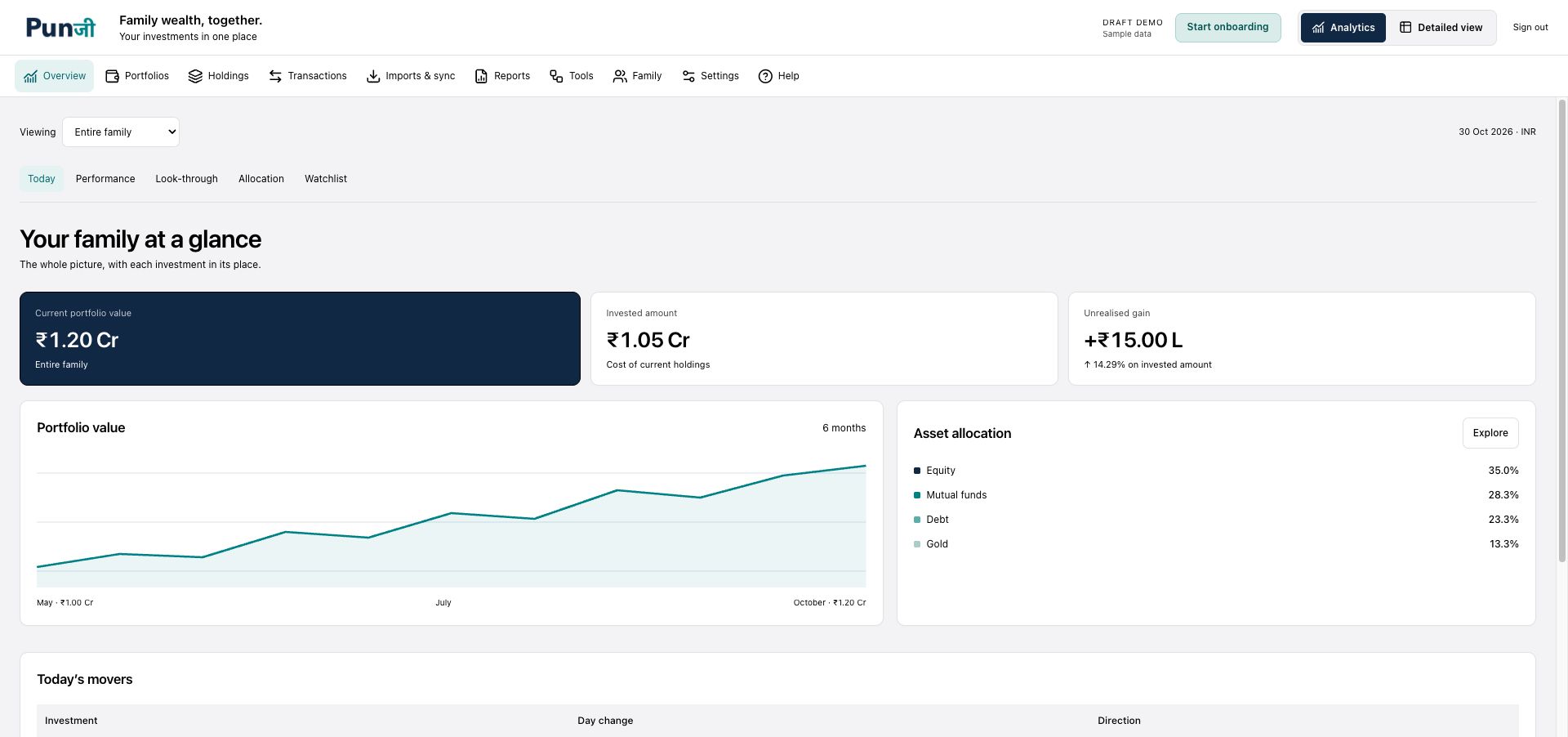
Punjii is an investment tracking app built around organising records by family owner and portfolio. Its reviewed-snapshot workflow can help keep a source and its holdings together. Check the selected source, owner and reporting date before using its figures. Separate snapshots should not be summed into a supposedly complete family valuation.
7. Make the next review easier
Save your account register, chosen source dates and exception list together. At the next review, start with what changed rather than rebuilding the account list. You can begin today with two accounts: identify each source, check for overlap and write one honest coverage note.
For record-keeping and account-safety guidance, see SEBI’s securities-market do’s and don’ts.
Join the Punjii beta waitlist for availability and access updates. Private beta is opening in stages.
Punjii is an investment tracking app. It does not provide investment advice or product recommendations.