A current-looking dashboard can contain figures reported on different dates. Before comparing them, ask when each number was actually measured.
1. Read the source labels
Keep statement date, transaction date and download date in separate fields. The date you saved a file does not refresh its contents.
2. Keep the review defensible
Choose one review date, then list sources that fall outside it. Do not silently carry an old price forward as today's valuation.
3. A simple example
Imagine one holding reported on Monday and another last month. Their combined amount is a mixed-date picture, even if both files arrived this morning.
4. Keep an evidence note
Keep the original source available to the people authorised to review it. A short note should identify the owner, the account scope, the reporting date and any unresolved fields. A blank or missing figure means that evidence is incomplete; it should not silently become zero.
5. How Punjii.com helps
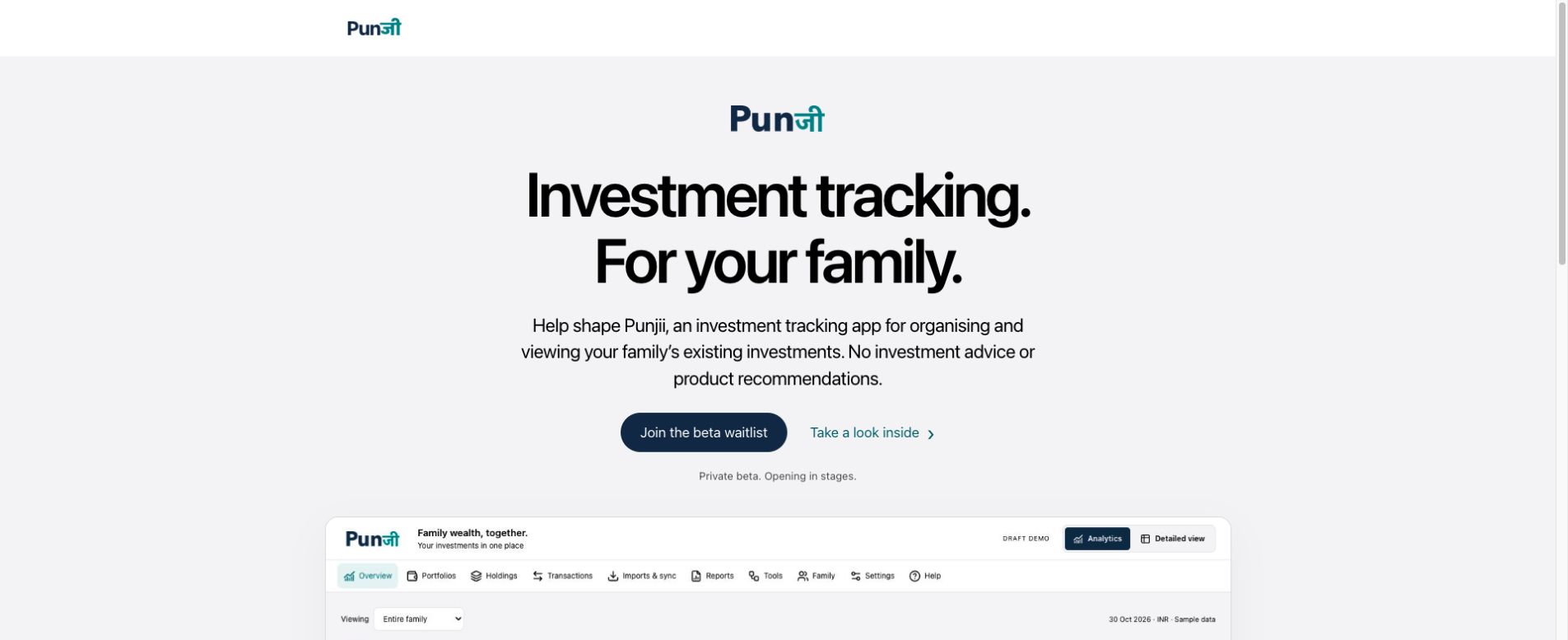
Punjii’s source-based tracking approach is useful when you retain the reporting date beside a reviewed record. A saved source should not be described as a live price connection.
6. One practical next step
Pick two sources and write an as-of label for each before comparing their amounts.
For general record-keeping and account-safety guidance, see SEBI’s securities-market do’s and don’ts.
Build a source-backed investment inventory before trying to produce a complete household total.
Explore Punjii and its beta waitlist. Availability and supported workflows may change; check the current product before relying on a feature.
Punjii is an investment tracking app. It does not provide investment advice or product recommendations.