A folder link is useful only when its intended reader has the appropriate access. Broad access is not the same as convenient access.
1. Read the source labels
Review the named people and link-sharing setting in your storage service. Test only with an authorised reader and avoid exposing private evidence to public links.
2. Keep the review defensible
Keep the minimum access needed for the task. If a recipient only needs a masked summary, do not automatically share all original statements.
3. A simple example
A link copied from a restricted folder may fail for its intended reader. Changing it to public can solve convenience by creating a much larger privacy problem.
4. Keep an evidence note
Keep the original source available to the people authorised to review it. A short note should identify the owner, the account scope, the reporting date and any unresolved fields. A blank or missing figure means that evidence is incomplete; it should not silently become zero.
5. How Punjii.com helps
Punjii can support organisation of investment records within its available workflows, but it cannot verify permissions in an unrelated storage service. Keep your source-location note and storage access review separate.
6. One practical next step
Choose one shared folder and check the actual audience shown by its access controls.
For general record-keeping and account-safety guidance, see SEBI’s securities-market do’s and don’ts.
Build a source-backed investment inventory before trying to produce a complete household total.
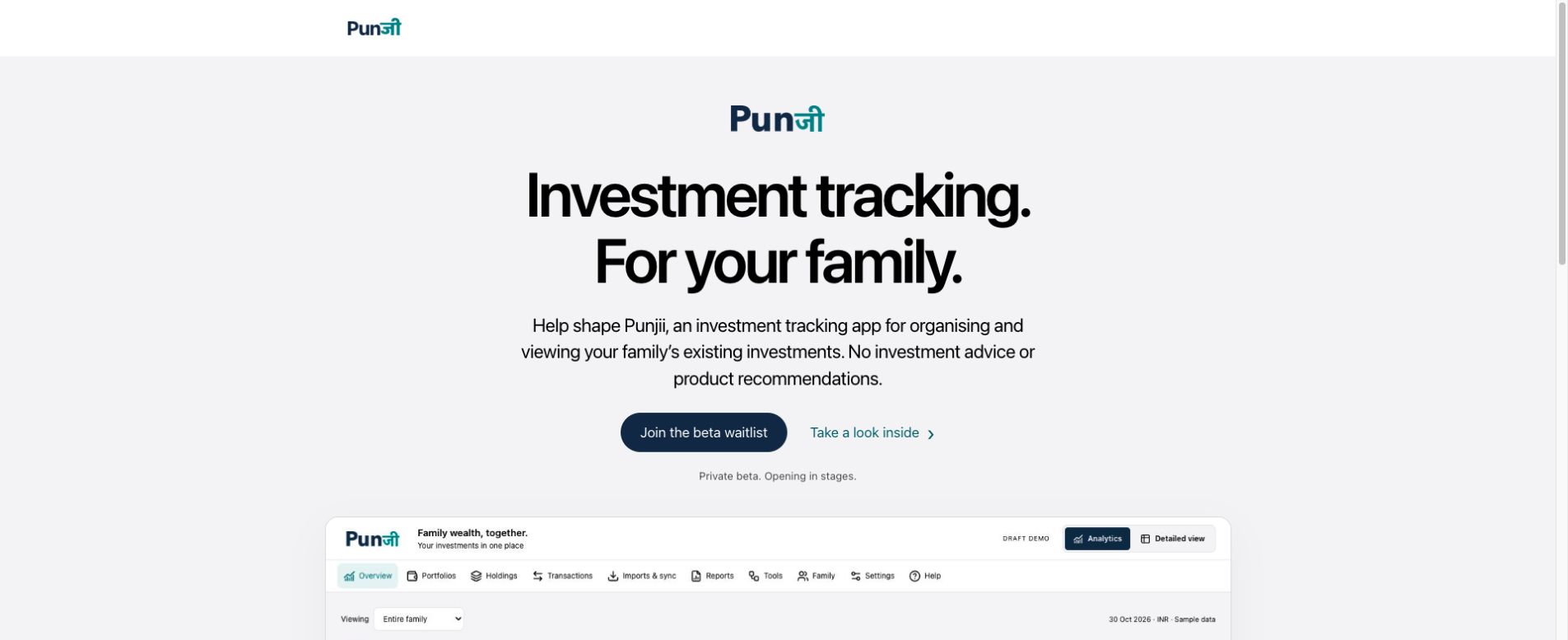
Explore Punjii and its beta waitlist. Availability and supported workflows may change; check the current product before relying on a feature.
Punjii is an investment tracking app. It does not provide investment advice or product recommendations.